Mobile EV Charging Or Fixed Charging Stations Which Saves Your Fleet More
 Admin
Admin

 6 Min
6 Min
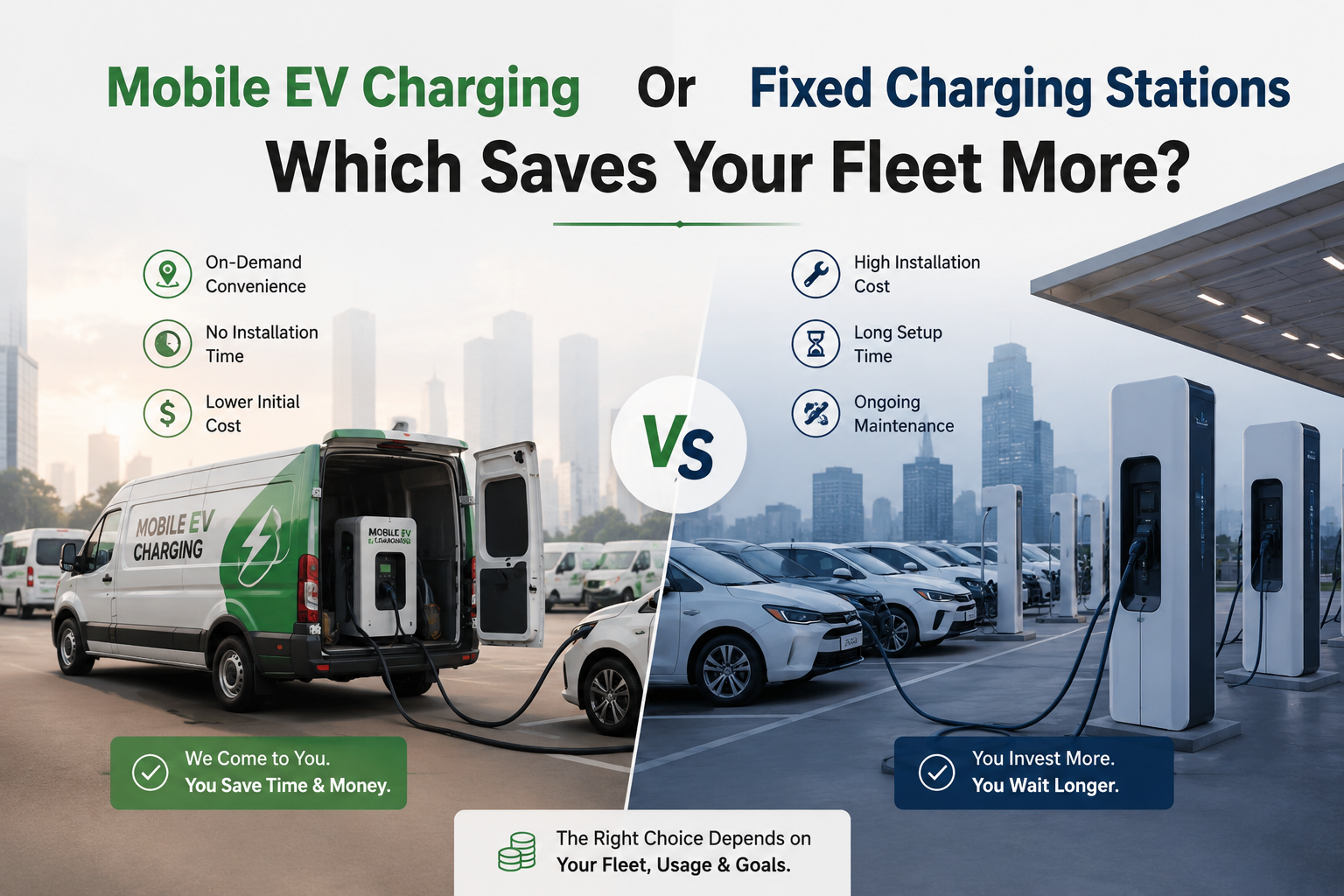
Every fleet operator moving to electric vehicles eventually asks the same question. Should the business invest in fixed charging stations or rely on mobile on demand charging that comes directly to the vehicle. The answer changes the shape of your budget, your operations, and how fast your fleet actually grows. Here is a clear cost and operations comparison to help you decide. The Real Cost Of Owning Fixed Charging Stations Fixed stations look simple on paper but carry costs that show up long after installation day. • Land or parking space that could otherwise generate revenue • Civil work and electrical infrastructure upgrades before a single charger is installed • Transformer and grid connection charges from the utility provider • Ongoing maintenance, servicing, and downtime when a unit breaks • Staff time spent moving vehicles to and from the charging bay • Underused capacity during off peak hours while still paying for the asset Where Mobile Charging Changes The Equation Mobile on demand charging removes the fixed asset entirely. The charging unit comes to the vehicle wherever it is parked, whether that is a depot, a client site, or a roadside stop. For fleets, this shifts spending from a large upfront investment to a predictable operating cost tied directly to usage. • No land, civil work, or grid upgrade costs to plan around • Pay only for the energy and service you actually use • Vehicles stay in service instead of being routed to a charging point • Scales up or down instantly as fleet size changes • Works across multiple locations without duplicating infrastructure at each site A Simple Way To Compare The Two Think of a fixed station as buying a building and mobile charging as renting exactly the space you need, when you need it. A small or mid sized commercial fleet rarely uses a fixed station at full capacity around the clock, which means part of that investment sits idle. Mobile charging matches cost to actual consumption, which is usually the more efficient model until a fleet reaches a scale where a dedicated station becomes fully utilized. Who Benefits Most From Mobile Charging • Delivery and logistics fleets operating across multiple zones in Dubai • Rental and leasing companies that cannot predict where vehicles will be parked • Businesses testing EV adoption before committing to permanent infrastructure • Corporate fleets that want charging without construction or facility changes Watt Charge Mobilities was built around this exact gap, bringing on demand EV charging directly to commercial fleets across Dubai without the cost and delay of building fixed stations. Frequently Asked Questions Is mobile EV charging more expensive than fixed stations in the long run Not for most fleets. Fixed stations require large upfront capital and ongoing maintenance regardless of usage, while mobile charging cost scales directly with actual energy consumed. Can mobile charging support a large commercial fleet Yes. Mobile charging providers can dispatch multiple units across several locations at once, which often covers a spread out fleet more effectively than a single fixed site. Do we still need any charging infrastructure if we use a mobile provider No dedicated infrastructure is required. The charging unit comes fully equipped to the vehicle location. How fast can a fleet switch from planning fixed stations to mobile charging Mobile charging can typically be arranged and running within days, compared to months of planning, permits, and construction for a fixed station.
Related Blogs


Download the Best Mobile EV Charging Solution App